
Safety
Enfield Car-Cruising Injunction Remains in Force Through 2025/26
Enfield has published updated injunction material on anti-social car cruising and associated behaviours across the borough.
Safety
Published 9 July 2026
HMOs in Enfield: Planning Pressure, Licensing Rules and the Bush Hill Park Picture
Houses in Multiple Occupation have become one of the sharpest housing issues in the London Borough of Enfield. For landlords they can look like a reliable income. For many residents they mean more bins on the pavement, noise and disturbance, tighter parking, noisier streets, increased anti-social behaviour, and fewer family sized homes. In 2025–26 the volume of applications, a new borough-wide additional licensing scheme, and a Planning Inspector’s intervention on the emerging Local Plan have pushed HMOs firmly into the spotlight.
Our catchment area of the Southbury Residents Association sits inside that wider story: a largely suburban, family-oriented part of the borough where conversions from single dwellings (Use Class C3) to small HMOs (Use Class C4) are tightly controlled—and closely watched.
What counts as an HMO in Enfield?
In simple terms, an HMO is a property let to three or more people who form two or more households and share a kitchen, bathroom or toilet. A typical “household” generally means people who are related and living together, or a couple living together as partners.
Two licensing layers then apply on top of that definition:
Type; Who it covers
Enfield position (as of mid-2026)
Mandatory HMO licensing
5+ occupants, 2+ households, sharing amenities
National rule; applies everywhere in Enfield
Additional HMO licensing
Smaller HMOs, typically 3–4 occupants from 2+ households
Borough-wide scheme live from 1 September 2025 to 31 August 2030
Selective licensing
Most privately rented homes (not only HMOs) in designated wards
Current scheme to 31 August 2026; expanded scheme approved to run from 1 September 2026
Licensing and planning are separate requirements for HMOs. A licence does not grant planning permission, and planning consent does not remove the need for a licence.
Planning: Why Enfield is different
Since October 2013, Enfield has had a borough-wide Article 4 Direction. That removes permitted development rights for changing a family house (C3) into a small HMO (C4, usually 3–6 unrelated sharers).
In practice: planning permission is required for a C3→C4 conversion anywhere in Enfield—including Bush Hill Park, Winchmore Hill and neighbouring streets.
Applications are assessed against existing development management policies (including quality of accommodation, clustering/concentration, noise, parking, refuse and amenity), London Plan standards, and Enfield’s HMO minimum standards on space, fire safety, heating, light and ventilation. Larger or more intensive schemes often need a clear fire strategy and evidence that the conversion will not worsen on-street parking stress.
The Local Plan gap—and why it matters now
Enfield submitted its new Local Plan for examination in August 2024 without a dedicated HMO policy. By mid-2026 the plan was still under examination and not adopted.
Campaign group Better Homes Enfield and others argued that this left the borough exposed. They reported roughly 15–20 HMO planning applications for the whole Borough of Enfield per month in early–mid 2025, rising later toward 45–50 per month, with a high proportion approved. In a post-hearing letter, the Planning Inspector stated that the new Local Plan must include a specific HMO policy, covering:
Until that policy is adopted, decisions still rest on the Article 4 Direction, existing Enfield Development Management policies, the London Plan and case-by-case judgement by Planners—but the direction of travel is toward tighter, more explicit local rules.
Bush Hill Park in focus
Bush Hill Park is not singled out in borough statistics as a unique “HMO zone,” but it illustrates the suburban pressures driving Enfield’s approach.
Currently, there are 245 registered HMOs in the catchment area of our Southbury Residents Association[1]. Whilst this does not necessarily mean that all these properties are currently used as HMOs, they are already registered as such and could be used in that way any time.
Southbury Avenue: 17
Clive Road: 28
Bertram Road: 28
Percival Road: 43
Sketty Road: 4
Cecil Avenue: 9
Fotheringham Road: 34
Lincoln Road (door numbers 116 – 178) 10
Southbury Road (door numbers 86 - 184, 113 - 305) 57
Great Cambridge Road (door numbers 147 – 281) 15
Character and demand
The area is popular with families and longer-term owner-occupiers: period and interwar housing, relatively green streets, and good links toward central London and other parts of north London. That same stock—often two to three- bedroom houses with the potential to extend outwards and upwards is attractive to investors seeking C4 conversions or larger HMO layouts where planning can be secured.
Why conversions are contested
What the Southbury Residents Association thinks about HMOs in our catchment area
Enfield’s HMO story in 2026 is one of tight planning control, expanding licensing and a Local Plan being forced to catch up. Bush Hill Park embodies the suburban side of that tension: attractive family streets, investor interest in large houses, and a regulatory framework that no longer treats small HMO conversions as a quiet paperwork exercise. The winners will be those who respect both the housing need HMOs can meet and the neighbourhood standards Enfield is now under clear pressure to enforce.
We are not fundamentally opposed to the operation of HMOs, as they offer people on lower incomes the opportunity to rent accommodation on terms that are still manageable. This is particularly necessary because, in recent times, rents for entire flats or houses have risen so sharply – due to changes in the political framework and the resulting withdrawal of many landlords from the rental market – that many people can no longer afford the rent for their own flat or house.
However, we believe that existing HMOs have reached a proportion of the total residential property stock in our area that leaves little scope for further growth in the future. Otherwise, we risk ending up in a situation of overdevelopment, which raises fears of a surge in negative effects.
We oppose high density HMOs that are clearly managed badly and run with the sole aim of maximising obscene profits for the property owners, as this leads in many cases to extremely cramped living conditions, unaffordable housing in itself and, often leads to antisocial behaviour. These negative effects have a knock-on impact on the rest of the local community, existing families and the entire neighbourhood and must be prevented.
What will we do as the SRA?
We will closely monitor new applications for HMOs in our area. Should we consider, in the case of individual applications, that the reclassification of properties as HMOs is likely to cause problems, we will submit an objection on the relevant applications to Enfield Council and, if presented, oppose them at the Council’s Planning Committee.
What can you do?
If you are affected by unacceptable behaviour, particularly antisocial behaviour, as a neighbour of existing HMOs, we recommend that you report it to Enfield Council.
How to report antisocial behaviour
If you're an Enfield Council housing tenant or leaseholder.
If you are a housing association tenant, it is vital that you report any antisocial behaviour you have experienced in and around your property to your housing provider in the first instance.
If you privately rent, please contact your landlord or managing agent in the first instance.
You can contact Enfield Council’s antisocial behaviour team by emailing asbu@enfield.gov.uk or by calling 020 8379 4612 where you will be required to leave your name, address, telephone number and brief reason for your call on voicemail.
Reporting to the police
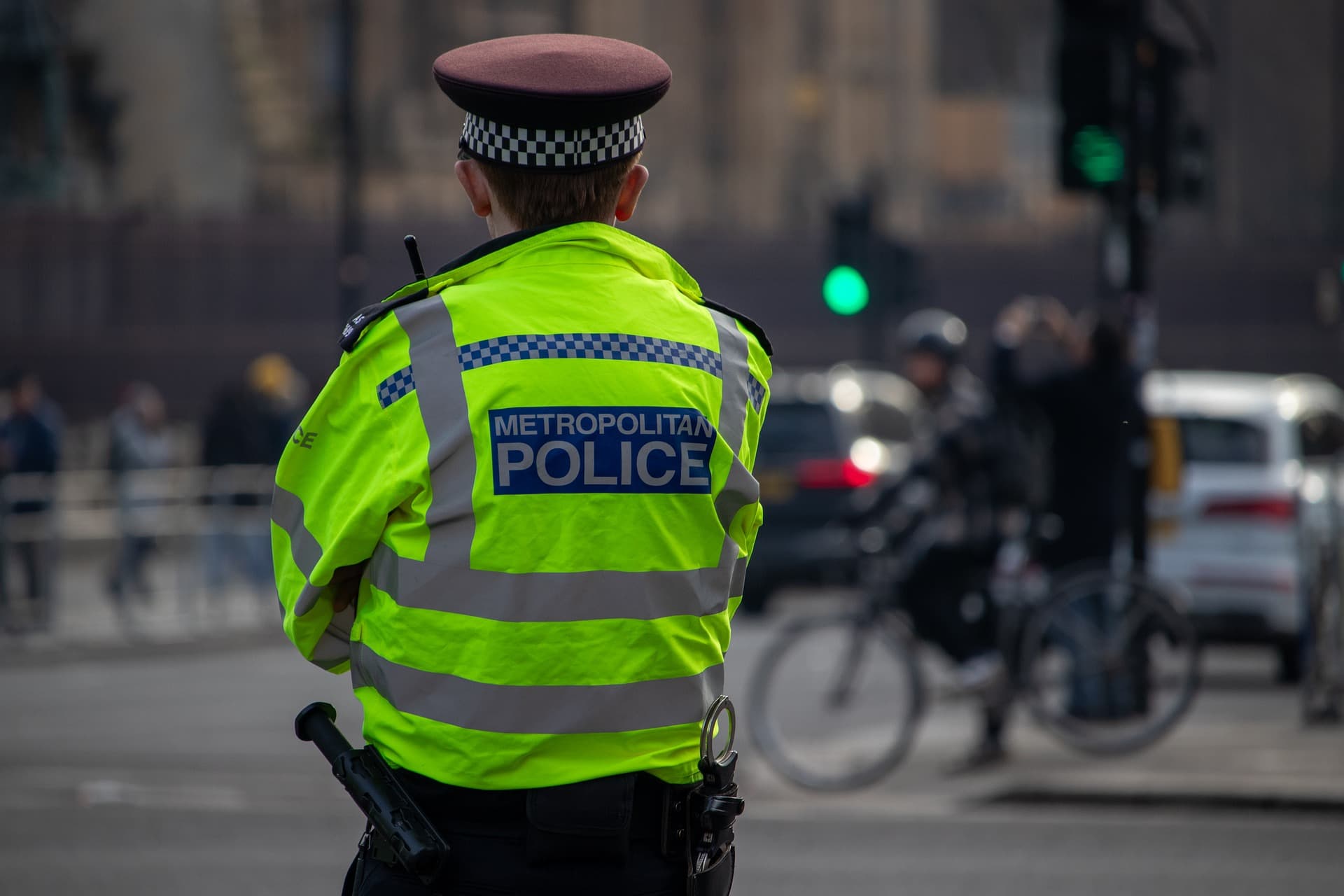
You can also report antisocial behaviour to the police. For urgent enquiries where there is an immediate risk, call 999. For non-urgent enquiries call 101 or, you can make a report online.
For more information, visit What is antisocial behaviour? - Metropolitan Police.
Reporting anonymously
You can report a crime anonymously to CrimeStoppers on 0800 555111 or visit Giving information - CrimeStoppers.
CrimeStoppers is not the police. If you require urgent police attention, please dial 999.
Antisocial behaviour case review
The Antisocial Behaviour Crime and Policing Act 2014 gives victims and communities the right to request a review of their case and bring agencies together to take a joined up, problem-solving approach to find a solution.
If this is the case, you can request a review under an antisocial behaviour case review (previously known as 'Community Trigger').
We ask you to provide us with details of the past incidents you have reported, including the dates you previously made reports, any reference numbers you have been given, and the names of any officers or teams you've been in contact with.
You can request an antisocial behaviour case review by emailing asbu@enfield.gov.uk (quoting 'Antisocial behaviour case review’).
[1] Source: https://www.agenthmo.co.uk/hmo-licensing/uk/england/london/enfield
Safety
Enfield has published updated injunction material on anti-social car cruising and associated behaviours across the borough.